Showing posts with label help. Show all posts
Showing posts with label help. Show all posts
Friday, February 10, 2017
DirecTV Might Help AT T Connect MDUs Out of Region
DirecTV Might Help AT T Connect MDUs Out of Region
Most multi-product businesses earn disparate amounts of revenue--and profit--from each discrete product line. In a perhaps-ideal scenario, a mix of young and fast-growing “next product cycle” products as well as mature, cash-producing lines of business contribute to overall earnings, profits and strategy.
Telecom companies are no different, featuring a mix of products, customer segments and growth profiles. And, frequently, profits and revenues from one part of the business are used to subsidize the operation or growth of other segments.
So it is that AT&T’s DirecTV operations might help AT&T grow its Internet access services outside its historic fixed network footprint.
The reason: AT&T plans to serve customers living in apartment complexes outside of its fixed network service area, operating as a competitive local exchange carrier, and offering 100 Mbps Internet access, perhaps using millimeter wave spectrum and fixed wireless.
Obviously, roof rights are required, and many apartment complexes might already have business deals with DirecTV that AT&T can leverage to supply high speed Internet access as well, using fixed wireless to reach some buildings.
The strategy apparently is to use a hub-and-spoke network where a central building is connected directly using optical fiber, while nearby buildings are connected using fixed wireless.
Available link for download

Tuesday, January 24, 2017
Can Connected Health Help With Widespread Pain Issues
Can Connected Health Help With Widespread Pain Issues
More than half of U.S. adults (125 million) had a musculoskeletal pain disorder in 2012, according to the U.S. Centers for Disease Control. Though it is not yet clear that connected health devices can help people manage or alleviate such pain, the wide extent of such problems suggests the potential for such innovatins.
Just over 20 percent of U.S. adults had arthritic conditions (22.1 percent) or lower back pain (20.3 percent). A smaller percentage of persons reported having non-arthritic joint pains or other joint conditions (17.5 percent) and neck pain or problems (14.3 percent).
Some 9.8 percent had sciatica issues. A significant proportion of the population reported having at least one other musculoskeletal problem that was not examined independently (28.1 percent).
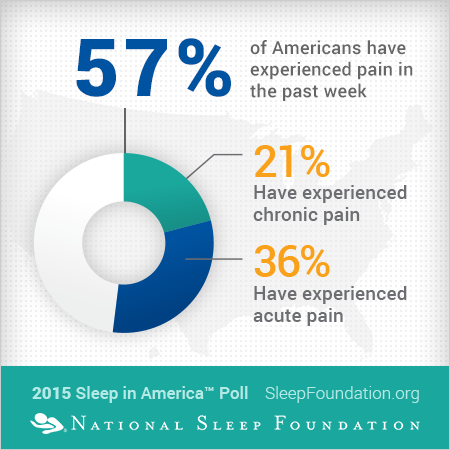
Pain also is correlated with another problem, namely lack of sleep. The 2015 Sleep in America Poll found that pain is a key factor in “sleep debt:” Some 21 percent of people have experienced chronic pain and lose 42 minutes of sleep due to it; 36 percent have experience acute pain, resulting in 14 minutes of lost sleep each night.
Available link for download
Subscribe to:
Posts (Atom)